
The Process Communication Model (PCM) is a framework that identifies how a person communicates, what they need to feel at their best, and how their behaviour shifts under stress. It was originally developed for NASA and is now used by couples, negotiators and organisations worldwide. For couples, its value is simple: it gives you a shared language for needs that are usually invisible. Here is how it works and how to learn it together in Laval.
What is PCM, in plain language?
PCM was created by clinical psychologist Dr. Taibi Kahler and has been researched and applied for decades. Rather than labelling people as simply one “type,” it describes a mix of communication styles within each person, and explains why the same sentence can land warmly with one partner and coldly with another. Its practical strength is that the patterns are observable and usable in real time, not abstract theory.
Where did PCM come from?
PCM was originally used by NASA to help select and pair astronaut crews who would communicate well under extreme pressure. That origin is telling: the model is built specifically around how communication holds up, or breaks down, when stress is high. That is exactly the situation where couples tend to struggle most, which is why the model transfers so naturally to relationships.
What are the six PCM personality types?
PCM describes six communication styles, each with its own strengths and its own core psychological needs. Broadly, these styles differ in whether a person connects most through feelings, thoughts, opinions, actions, reflection, or reactions and humour. Everyone has all six within them, arranged in a personal order, with one style as a “base” that feels most natural.
Understanding your order, and your partner’s, explains a great deal about why you connect easily in some areas and rub in others. It reframes “we’re just different” into something specific you can name and work with.
What are core psychological needs in PCM?
Each style has needs that, when met, keep a person feeling steady and at their best. Examples include recognition for who they are, appreciation for what they do, clear structure, quiet time, sensory enjoyment, or playful contact. When these needs go unmet for too long, communication starts to slip. Much of couple friction is simply two sets of needs quietly going unfilled.
How does PCM help couples specifically?
Once you know your own core needs and your partner’s, you can express what you need in a way your partner can actually hear, and recognise their needs even when they differ from yours. This turns vague friction, the sense that “we just don’t get each other,” into something concrete and workable, and it reduces the assumption that a mismatch means a lack of love.
What does PCM say about stress and conflict?
A key strength of PCM is its focus on distress. It maps how each style tends to change under pressure and describes a predictable “distress sequence,” the early and then stronger signs that someone is moving away from their best. Learning to spot these signs, in yourself and your partner, lets you interrupt a spiral before it hardens into an argument.
How can we learn PCM as a couple in Laval?
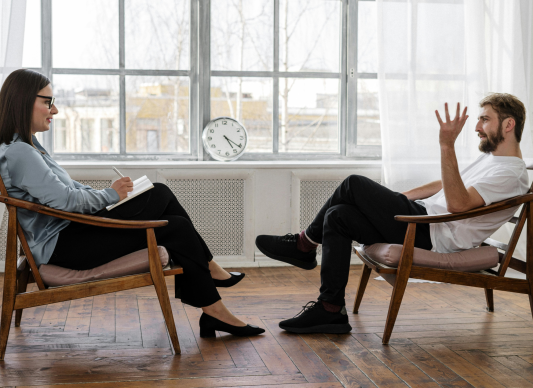
CONECT is a one-day couples workshop at Clinic Dr. Bita in Laval that applies PCM directly to your relationship. Both partners complete a PCM inventory beforehand, then spend the day with an OPQ-licensed, PCM-certified psychologist learning your profiles, practising privately, and building a personalised plan you can use the next morning. It is held at the Laval clinic in a small group of no more than five couples.
To explore this with your partner, see the CONECT couples workshop in Laval, or book a free intake call to talk it through first.
Frequently asked questionsIs PCM scientifically grounded?PCM was developed by a clinical psychologist and has been researched and applied for decades across relationships, business and high-pressure settings such as astronaut selection. Do both partners need to do the profile?Yes. The value comes from understanding both profiles, so each partner completes an inventory before the workshop. Is PCM the same as a personality test like Myers-Briggs?Not quite. PCM focuses on how you communicate and how that shifts under stress, in real time, which makes it especially practical for couples. Is the CONECT workshop therapy?No. It is a structured learning day led by a psychologist. If deeper work is needed, the clinic can refer you to couples therapy. How long does the profile take?The PCM inventory takes about 30 minutes and is completed online at home before the workshop day. |